POWER.
UNDER
CONTROL.

LT & HT panels for power distribution and control.
Built around the demands of your project.

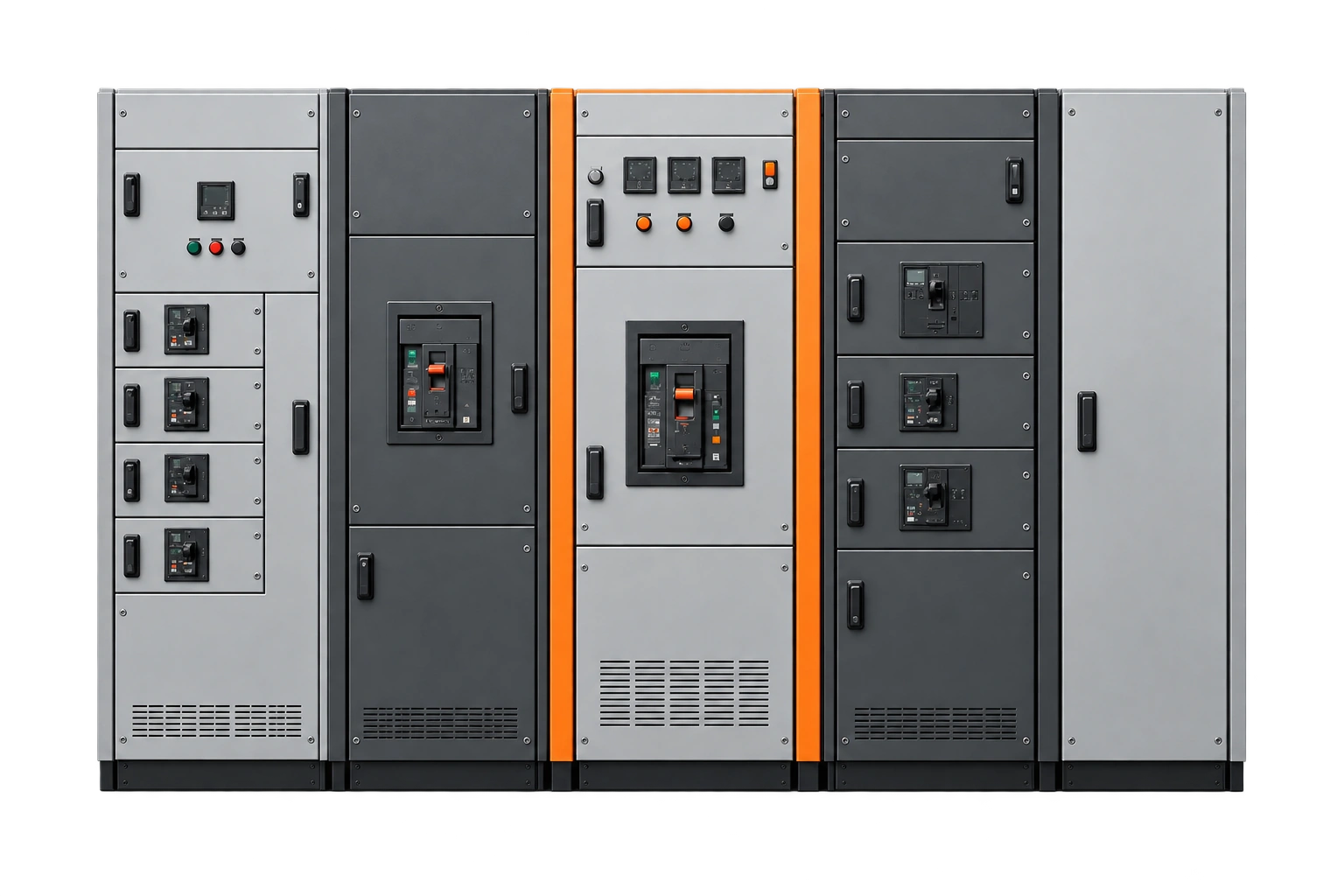
Front-facing LT switchgear concept with grey cabinets, orange trim, and numbered metering, protection and enclosure features
01 / METERING

Indication & control

02 / PROTECTION

Switching devices

03 / ENCLOSURE

Service access

Representative LT panel concept

Behind every great project,
there’s a better
power system.

Built around your project. Engineered for Nepal.

Brilliant Panel Tech Pvt. Ltd. specialises in low tension (LT) and high tension (HT) electrical panels for industry, buildings and infrastructure in Nepal. From incoming HT supply to LT distribution and motor control, we bring switching, protection and control requirements together around your project.

Part of Brilliant’s lighting and electricals portfolio, our work is guided by three priorities: considered engineering, disciplined manufacturing and clear project coordination.

A panel needs to do more than fit a drawing. It needs to fit the electrical room, the installation programme, the maintenance routine and the future of the facility. These practical details guide every project conversation.

Discover the world of Brilliant

A local perspective.

Rooted in Nepal, with an understanding of local project needs and the value of close coordination.

A project-first mindset.

Start with the load, site conditions and consultant’s brief. Shape the panel around them.

The Brilliant connection.

Specialist panel solutions within Brilliant’s wider lighting and electricals portfolio.

From incoming power
to the final circuit.

HT switching to LT distribution.
Every panel starts with your specification.

HT 01 / 07

HIGH TENSION PANELS & SWITCHGEAR

Control and protection
at the incoming supply.

HT panels manage incoming supply, feeder switching and transformer protection on the higher-voltage side of a distribution system. The assembly brings switching devices, protection relays, metering and interlocking into the project scheme.

Key decisions

  • Rated voltage, insulation level, fault duty and incomer, outgoing feeder or bus-coupler arrangement.
  • Circuit-breaker selection, including vacuum circuit breakers where specified, with relay protection and current/voltage transformer requirements.
  • Earthing and interlocking arrangements, compartment access and any required internal-arc classification.
  • Utility interface, transformer coordination, cable terminations and control-power requirements.
Typical applications
Industrial facilities, commercial developments, substations and infrastructure
Start the discussion with
SLD, supply voltage, fault level, transformer data, utility requirements and protection scheme
Discuss your HT panel

Panel configurations, ratings, component makes and availability are confirmed against the project brief and final technical proposal.

Quality lives
in the details.

The parts you see. And the decisions you don’t.

For LT and HT panels, quality starts with the electrical duty. Device selection, insulation, current paths, protection and control wiring all shape how the assembly performs.

Our quality framework puts these decisions at the centre of the project — with requirements agreed early and evidence defined before manufacture.

Q / 01

A clear design basis.

Define the supply voltage, connected loads, fault duty, insulation requirements and operating environment. For HT panels, include the utility interface and transformer protection scheme.

Q / 02

Considered components.

Agree on device makes, ratings, protection functions and application suitability. Record approved alternatives so a component change is a reviewed decision.

Q / 03

Mechanical integrity.

Enclosure construction, compartments, mounting, door alignment and cable access should suit the installation. For HT switchgear, define interlocking, earthing and any required internal-arc classification.

Q / 04

Engineered current paths.

Busbars and connections need to be considered together with thermal performance, short-circuit requirements, supports and clearances. A current rating belongs to the assembly as specified.

Q / 05

Disciplined wiring.

Clear identification, suitable terminations, orderly routing and accessible terminals make inspection and maintenance easier. Power, control and communication wiring each have their own requirements.

Q / 06

Traceable decisions.

Link the approved drawings, component schedule, inspection scope and final records to the project. The aim is a panel whose configuration can be understood long after handover.

INSPECTION & VERIFICATION

Define the checks.
Keep the evidence.

The inspection and test plan should identify the applicable checks, acceptance criteria, responsibilities and any consultant witness points.

The final verification scope is agreed for the panel and applicable project requirements.

01

Construction & identification

Assembly arrangement, device selection, labels, terminals and correspondence with approved drawings.

02

Connections & protective circuits

Connection integrity, protective bonding, earthing arrangements and relevant construction checks.

03

Electrical verification

Applicable dielectric and insulation checks, with methods and criteria defined by the relevant standard.

04

Functional operation

Switching, indications, interlocks and mechanical operation, with protection-relay and trip-circuit checks where applicable to the agreed scheme.

LT & HT ASSEMBLY STANDARDS

LT assemblies and HT switchgear have different verification requirements. For LT panels, specify the applicable IEC 61439 parts. For HT metal-enclosed switchgear, identify the applicable IEC 62271 requirements, including IEC 62271-200 where relevant. Required ratings, classifications and supporting test evidence are defined for the offered configuration.

A panel is only as good
as the thinking inside it.

The manufacturing journey starts with a shared understanding of the project. Each stage should carry that understanding into the next.

01

Understand.

Review the single-line diagram, load schedule, installation environment and project requirements.

  • SLD & load schedule
  • Site & service conditions
  • Scope & delivery programme
02

Define.

Agree on the configuration, component makes, protection requirements and documentation scope.

  • GA & schematic drawings
  • Component schedule
  • Review & approval points
03

Build.

Plan fabrication and assembly around approved drawings, cable access and maintainability.

  • Enclosure & mounting
  • Busbars & device assembly
  • Wiring & identification
04

Verify.

Agree on the inspection, verification records and handover requirements before dispatch.

  • Agreed inspection checks
  • Open-point closure
  • Records & dispatch readiness

Quality begins with the specification. Applicable standards, enclosure protection, fault ratings and verification requirements belong in the technical agreement for every project.

Your specification.
Our starting point.

A meaningful panel proposal starts with the duty it needs to perform. The right conversation covers the installation, operation and future requirements as well as the electrical ratings.

Bring the consultant’s specification, SLD or project brief. For HT scope, include utility connection requirements, transformer data and the protection philosophy so the incoming supply and downstream LT system can be coordinated.

Start the technical conversation

Space for cable termination. Access for maintenance. Spare circuits for expansion. Details that deserve a place in the first drawing.

DESIGN INPUTWHAT TO DEFINE

Electrical duty

System and rated voltage, insulation level, frequency, current, fault duty and load characteristics.

Installation environment

Indoor or outdoor location, temperature, altitude, dust, moisture and ventilation.

Enclosure & access

Dimensions, mounting, compartment access, cable entry and any required pressure-relief provisions.

Protection & control

Protective devices and relays, coordination, metering, interlocks, earthing and operating modes.

Components & interfaces

Approved makes, current and voltage transformers, cable and busbar interfaces, control power and communication requirements.

Future requirements

Spare ways, planned loads, expansion space and access for replacement or maintenance.

Different industries.
One essential
connection.

Every building and every process has its own demands. The panel brief should reflect them.

Tell us about your project

Manufacturing & industry

Consider production loads, motor starting, process control and the ability to isolate equipment for maintenance.

Hotels & hospitality

Coordinate guest services, HVAC, kitchens and utility changeover around the operating needs of the property.

Commercial developments

Organise floor-wise and tenant distribution, metering requirements and space for a development to evolve.

Healthcare & institutions

Identify essential circuits, supply arrangements and consultant-defined continuity requirements early in the design.

Infrastructure & utilities

Coordinate HT incoming supply, transformer interfaces, LT distribution and control requirements with the wider project infrastructure.

A better handover.
A clearer way forward.

The project continues after the panel leaves the assembly floor. Useful documentation helps the installation team understand what they are receiving and the facility team understand what they will operate.

Our approach is to define the documentation and support scope at the proposal stage, so the responsibilities for delivery, installation, commissioning and after-sales coordination are clear.

Closer to the project.
Closer to the conversation.

Local manufacturing brings the project and panel teams closer together. It supports direct design coordination, clearer discussions about site requirements and an ongoing relationship with the people behind the panel.

A few useful
answers.

What is the difference between LT and HT panels?

LT (low tension) panels distribute and control low-voltage power to building services, motors and final circuits. HT (high tension) panels handle the higher-voltage supply, switching and protection associated with incoming feeders and transformers. The exact voltage class, duty and equipment arrangement follow the project specification.

What should I provide for an HT panel proposal?

Share the supply voltage, fault level, SLD, transformer data and utility connection requirements. Include the protection philosophy, metering requirements, preferred equipment makes and available installation space. These inputs define the switching arrangement, relay functions and interfaces with the downstream LT system.

What should I share for a project discussion?

Start with your single-line diagram (SLD), bill of quantities (BOQ), load schedule and project location. Include the required delivery programme, preferred component makes and consultant specifications if available. If the design is still developing, share the project brief first.

Can the panels follow our consultant’s specifications?

Your consultant’s requirements should be the starting point. Panel configuration, component selection, applicable standards and verification scope need to be reviewed and agreed in the technical proposal before an order is confirmed.

Is Brilliant Panel Tech part of Brilliant?

Yes. Brilliant Panel Tech Pvt. Ltd. is part of Brilliant, specialising in LT and HT electrical panels within its wider lighting and electricals portfolio.

How should quality requirements be specified?

Include the applicable assembly standard, service conditions, ratings, enclosure requirements and verification evidence in the specification. Agree on the inspection plan, documentation and witness points before manufacture. A component’s own certification does not, on its own, establish conformity of the complete assembly.

Can we specify component makes and plan for expansion?

Yes — share the approved makes, spare-way requirements and anticipated future loads with the brief. Feasibility, space, ratings, availability and any alternatives should be resolved in the technical proposal before the final configuration is approved.

What about installation, commissioning and after-sales support?

These responsibilities are defined project by project. Tell us what support you need so the proposal can identify the supply boundary, site responsibilities, documentation, warranty and service arrangements clearly.

Bring us your brief.
Let’s build the
right panel.

Planning LT distribution, an HT panel or a coordinated project package?
Start a conversation with Brilliant.

corp.projects@brilliantnepal.com

Share your SLD, BOQ or project brief with our corporate projects team.